
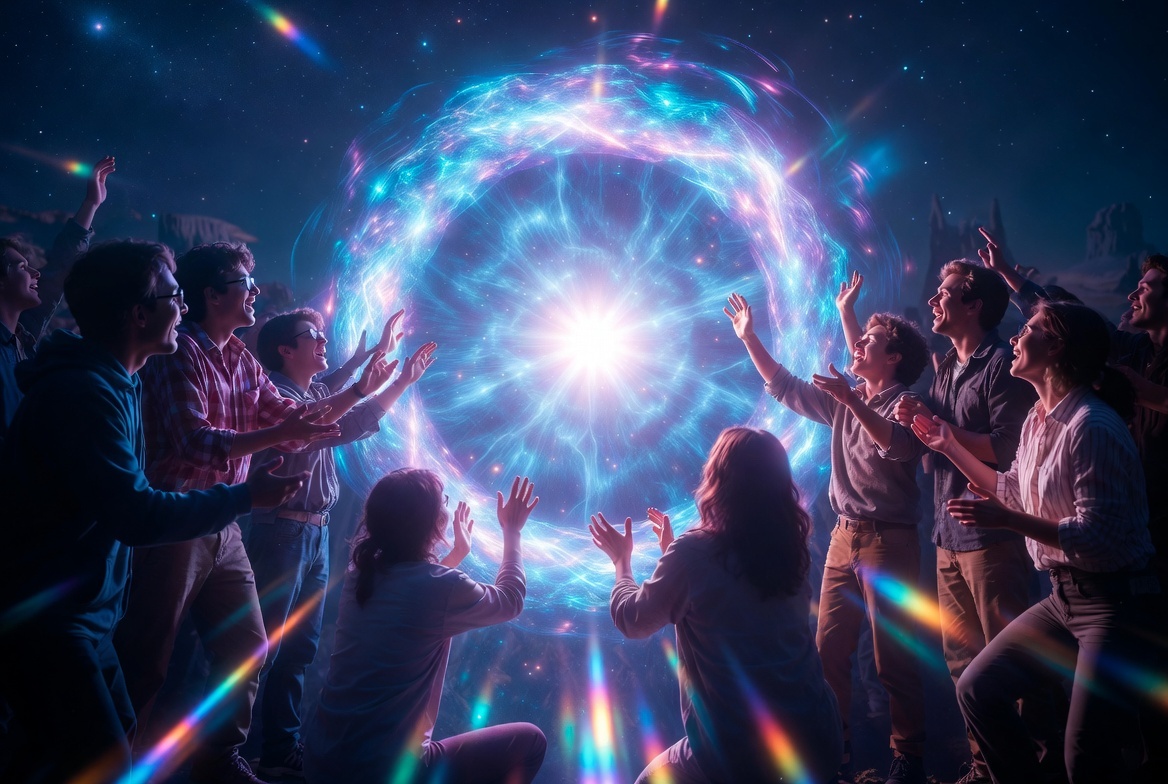
As 2025 comes to an end, one thing is clear:
this year didn’t just change how creators create — it changed what creation means.
Creators are no longer just producing content. They are building worlds, shaping communities, and designing experiences. The line between audience and participant has blurred, and 2025 will be remembered as the year this shift became impossible to ignore.
Let’s look at what 2025 gave us — and what creators and users can expect from 2026.
2025 in Numbers: The Year Creation Became Experiential
The creator economy didn’t slow down in 2025 — it matured.
-
The global creator economy surpassed $250 billion, with projections pointing toward $480+ billion by 2027.
-
Over 60% of Gen Z users said they prefer interactive or participatory content over passive formats like static posts or long videos.
-
Average user attention spans dropped below 7 seconds, yet interactive experiences increased engagement time by 2–4× compared to traditional content.
-
Platforms that introduced choice-based, immersive, or game-like formats saw 30–50% higher retention rates.
-
More than 40% of creators reported experimenting with AI-assisted tools, not to replace creativity—but to scale storytelling and production.
2025 proved one thing:
👉 Attention is no longer earned by volume. It’s earned by immersion.
What Creators Learned in 2025
1. Content Is Not Enough — Experience Wins
Creators who focused on how users feel inside content outperformed those chasing trends. Interactive narratives, branching stories, and immersive visuals became retention engines.
2. Communities Matter More Than Algorithms
Private groups, co-creation, and audience participation replaced “viral moments.” Creators who invited users into the process built stronger loyalty than those chasing reach alone.
3. AI Became a Creative Partner
In 2025, AI stopped being a novelty. It became infrastructure — helping creators prototype ideas, generate worlds, animate characters, and personalize experiences at scale.
2026: The Year Creators Open the Multiverse
If 2025 was about realization, 2026 will be about expansion.
Here’s what creators and users can realistically expect next year:
🌍 1. From Platforms to Universes
Creators won’t just run channels — they’ll run story worlds.
Characters, narratives, and environments will live across formats: web, mobile, AR, VR, and 3D spaces.
Users won’t “follow” creators.
They’ll enter their universes.
🎮 2. Interactive Storytelling Goes Mainstream
By 2026, interactive storytelling will no longer be niche.
-
Choose-your-path stories
-
Collaborative narratives
-
User-influenced outcomes
-
Persistent story worlds
These formats will define engagement, especially for younger audiences raised on games and immersive media.
🤝 3. Users Become Co-Creators
Audiences will expect agency.
Users will:
-
Shape story outcomes
-
Influence character decisions
-
Build alongside creators
-
Leave a lasting footprint in digital worlds
The most successful creators will design systems for participation, not just content pipelines.
🧠 4. Smarter Personalization, Deeper Emotion
AI in 2026 will move from content generation to experience personalization:
-
Stories adapting to user behavior
-
Worlds reacting emotionally to choices
-
Narratives that evolve over time
This will redefine storytelling — from linear narratives to living experiences.
Where Big Tale Fits into This Future
At Big Tale, we believe 2026 marks the beginning of a new creative era — one where anyone can build immersive, interactive stories without design or coding skills.
The future isn’t about replacing traditional storytelling. It’s about unlocking depth, agency, and presence.
Creators don’t need more tools. They need new dimensions.
Closing the Book on 2025 — Opening the Door to 2026
2025 ends with a powerful truth:
Creation is no longer about being seen. It’s about being experienced.